
Risk management
Risk management is an integral part of doing business at Vebego. It is an essential consideration when assessing opportunities and setting strategies, and management makes decisions in line with Vebego's risk appetite.
The increased volatility in recent years, driven by an uncertain geopolitical landscape, has heightened the importance of active risk management. Across our core companies, we identify, mitigate and monitor risk on a structural basis, addressing the risks the companies face in achieving their strategies, and managing them in a way that increases the likelihood of us meeting our business objectives. A proactive approach ensures risk management is part of our board conversations and is embedded in our processes. This benefits our decision-making and is essential to creating and preserving long-term value.
From 28 February 2026, the geopolitical situation in the Gulf region has deteriorated significantly following military actions by the United States and Israel against Iran. While it is still too early to fully assess the medium‑ and long‑term implications for Vebego, we have identified the key areas of attention. Rising fuel prices primarily affect the landscaping activities, but do not have a material impact on Vebego’s overall cost structure. Due to the divestment of energy‑intensive activities at Vebego Facility Solutions, previous risks related to gas prices are substantially reduced. Vebego’s revenue mix remains largely insensitive to economic cycles, although prolonged negative sentiment in the German economy may put pressure on M2’s staffing activities. Finally, we continue to be alert for the potential impact on employees. Company management remains alert with regard to employee wellbeing and any developments in absenteeism.
The main consequence of the geopolitical uncertainty is persistently high inflation. In 2025, the war for talent – characterised by a shortage of staff and growing pressure on existing staff – continued to have a significant impact on Vebego. The extent of this impact in the short and longer term is difficult to assess at this stage.
Inflation
The macroeconomic consequences of the inflation of recent years are clear, and Vebego has been affected by sharp increases in both direct and indirect costs. Vebego employees have also felt the effects of inflation. The drastic increase in the cost of living continues to place a heavy burden on many of our colleagues. Pressure on purchasing power can increase people’s stress levels and lead to increased illness-related absences, both short and long-term.
High inflation has also played a role in collective bargaining and, reflecting the trends in other industries, is likely to continue to do so. Inflation has significantly increased the cost of our services, placing considerable pressure on price negotiations with customers. In many cases, it is not possible to pass on the full increase in labour costs.
Maintaining a sustainable profit margin is therefore one of the key pillars of the Vebego strategy. We will continue to reap the benefits of operational synergies, plus the economies of scale arising from the restructuring we have undertaken over the past four years. In addition, we have launched a programme strengthening our pricing strategies. Implementing technology, leveraging data, innovating and pursuing new business models could also contribute to securing a more sustainable profit margin.
The companies’ management teams are working hard to mitigate risks across all these areas. Currently, they can have the greatest impact by supporting and helping their employees as much as possible. Paying attention to the causes of illness-related absences and providing guidance to employees are high on the agenda. As far as customers are concerned, we have always seen it as a normal part of our service to maintain a constant dialogue with them.
Other risks
Vebego remains alert to other developments that could affect the company. Changes in the office market, for example, combined with the popularity of remote working, are an important issue for all facility management companies. The amount of office space is declining, which poses a risk to cleaning and facility management companies. On the other hand, the way office space is used is expected to change, potentially creating opportunities for our companies.
Continuity
Vebego has been in business for over 80 years, and we see no risk to its ongoing continuity. The third generation of the Goedmakers family is involved with Vebego as a board member and as employees, and also holds depositary receipts. The company’s order books are strong, and the retention rate is high, with a stable customer base and many long-standing relationships.
The liquidity position was under pressure for some time following the acquisition of hectas, but improved significantly in 2025, returning to a stable level. Our customers generally pay their outstanding invoices on time and in full, and we can meet our obligations to employees, suppliers and governments on time. We expect personnel costs, which are by far our largest cost item, to continue rising. Our wage bill is increasing faster than the average due to collective labour agreements (see also ‘Inflation’), which will put pressure on our margins. Rate-related negotiations with customers are intensifying, but the longer-term liquidity position remains positive. In addition, Vebego has a credit facility, and this remained unused at year-end. Solvency – the ratio of shareholders’ equity to total assets – was 30.2% in 2025, indicating that Vebego is well-positioned to meet its long-term debt obligations.
The ongoing challenge of being an attractive employer
As mentioned earlier, the ongoing labour shortage poses an immediate risk for Vebego and its services. Attracting and retaining well-qualified staff is a challenge at all levels. At times, individual companies have hundreds of vacancies. In the Netherlands, complex tax and allowance rules sometimes discourage employees from working more hours because doing so can affect their total income. Job seekers have plenty of choices in the current labour market and can afford to be selective. Remuneration and work-life balance are key issues, and these pressures affect us and could eventually directly impact our services. The question then becomes: can we still deliver on our promises to customers?
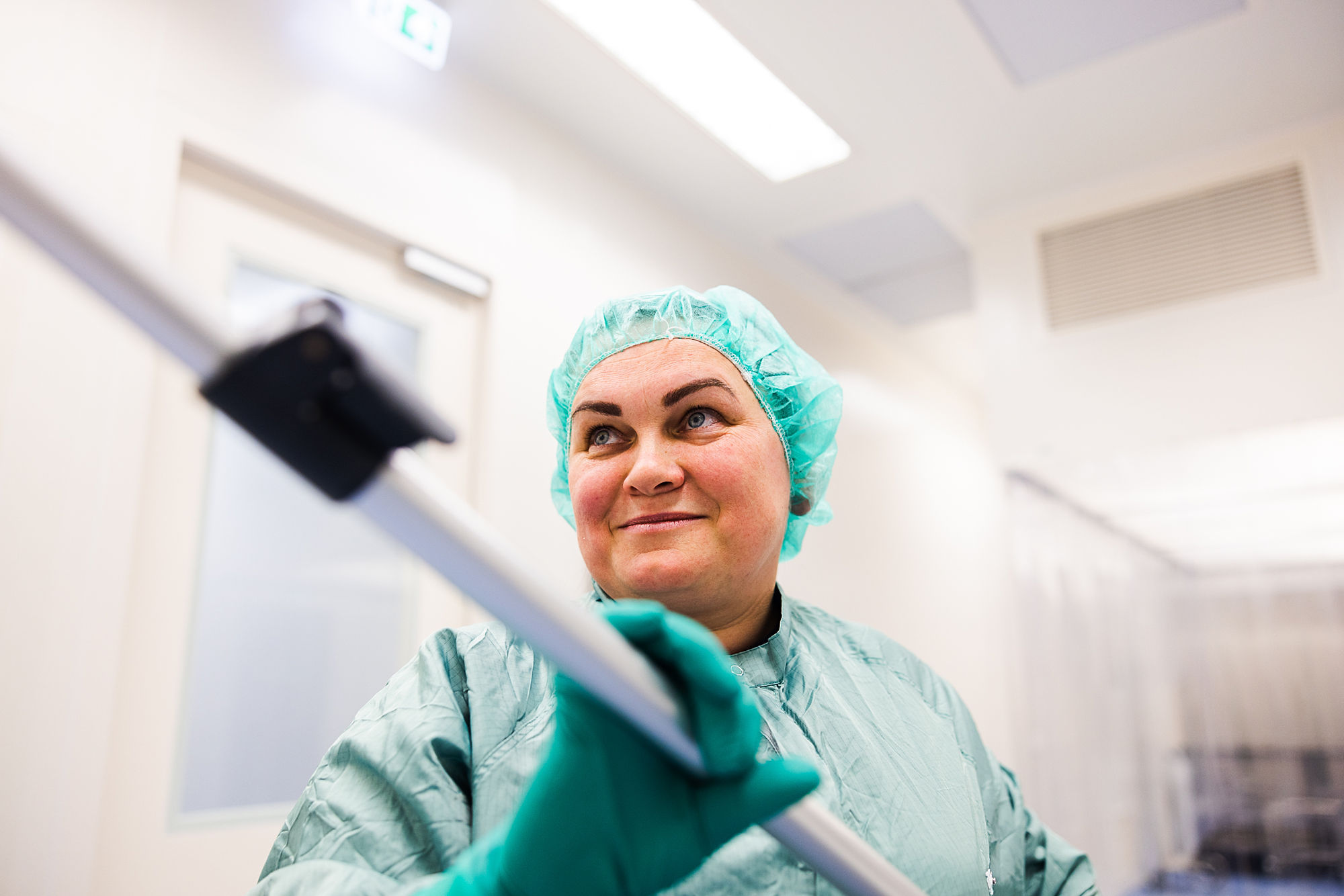
As always, the most impactful mitigation we can undertake is to increase retention and reduce illness-related absences. If people stay, there is no need to replace them. Another measure is to offer hybrid working possibilities, something many potential colleagues aspire to in office-based support and administrative roles. We offer this to our employees and state it in our job ads. Finally, we are investigating if and how technology could support our employees in their work, as well as in navigating a tight labour market and an ageing population.
Increasingly complex legislation and regulations
Vebego’s decision to focus on eight core companies has proved to be a good one, particularly given the increasingly complex legislation and regulations in the countries in which we operate. Governments, external financiers, auditors, regulators and tax authorities are increasingly demanding. To maintain control, the holding company operates an internal audit process based on a comprehensive, country-specific checklist and a balance sheet data book. The checklist is reviewed and updated annually to reflect current relevant legislation, regulations and incidents. Every quarter, our core companies assess their degree of compliance with laws and regulations. Also, every quarter, the holding company’s internal audit team reviews these balance sheet movements and conducts internal audits in all the countries in which Vebego operates. The audit team uses a sampling methodology based on how the Dutch tax authorities conduct their audits. During audits, the team verifies whether rules are being followed correctly and whether deficiencies have been corrected. At the end of 2025, Vebego adjusted the composition of Group Finance, adding a Group Tax Manager and a Group Finance Director. We are confident that this will help us achieve further progress in compliance despite the growing complexity of legislation and regulations.
Information and IT security
IT security is a high priority at Vebego, and with IT-related risks increasing every day, the organisation needs to pay close attention to the prevention, prompt detection and containment of cyberattacks and the activities of cybercriminals. This requires constant alertness at all levels in Vebego. We intercept malware, phishing emails and hijacking software almost daily, and with cybercriminals remaining active and innovative, we need to remain vigilant.
The programme to connect more Vebego companies to the central IT infrastructure is progressing well, and the aim is to have all core companies integrated into a single tenant by the end of 2026. This will facilitate cooperation between the companies and ensure that IT security and compliance are standardised.
In addition to implementing the IT infrastructure initiatives, Vebego places particular emphasis on continuously protecting its critical IT applications and data. In 2026, we will continue to focus on IT security and business continuity, including technological and organisational assessments and disaster preparedness. We also aim to strengthen our existing measures, implement new measures and standardise and develop an IT risk framework based on and certified to ISO 27001. Continually focusing on improvement will drive the necessary increase in maturity level across the various domains.
Financial impact of risks
Vebego’s risk profile is determined by both the company’s geographical spread and the diversity of its services. This double spread creates a resilient risk appetite. Thanks to the business model, market focus, processes and continuous KPI monitoring, the individual companies can anticipate market growth or decline very quickly. Risks and opportunities are assessed and managed centrally and locally.
The risk appetite is derived from the strategy and the objectives and can be categorised as follows:
Strategic: Vebego takes calculated risks to grow organically. With the commitment, drive and innovative capacity of our employees, we can turn risks into opportunities.
Operational: Years of experience in the companies enable us to take well-considered risks. We implement proven concepts and ways of working both centrally and locally.
Financial: Our financial policy is prudent, with a focus on organic growth and financing that does not rely on credit institutions. We minimise liquidity and credit risks (see also below).
Financial reporting: There is limited estimation uncertainty in the financial accounts. The most important estimate concerns the provision for WGA. This has been measured in accordance with Dutch GAAP and represents management’s best estimate of the obligation, taking into account all relevant information available at year‑end.
Compliance: Vebego aims for 100% compliance with legislation, regulations and our own internal procedures and rules of conduct. We have a Risk & Compliance department at Group level to monitor compliance, and this meets regularly with the Risk & Audit Committee of the Supervisory Board. Compliance with customer and supplier agreements and being a good employer are all high priorities for Vebego.
Price, cash flow, liquidity or credit risk
Liquidity risk is the risk that Vebego is unable to meet its financial obligations. Vebego aims to maintain sufficient liquid assets to meet such obligations as they fall due, under both normal and stressed conditions. This is achieved by maintaining sufficient cash and credit lines.
Vebego’s credit risk relates to the possibility that customers and other counterparties may be unable to meet their obligations to us. The credit management departments of the Vebego companies monitor this credit risk on a weekly basis. Vebego's credit risk is limited as it is spread across many customers in various sectors and countries.
Resilience
High inflation and the ongoing shifts in the labour market, particularly its tightness, are the main factors affecting our strategic and operational risks. The impact on Vebego depends on a combination of isolated influences and interrelated and mutually reinforcing ones. For the time being, we see no reason to adjust our internal risk management system in 2026. Together with the Audit & Risk Committee, which comprises three members of the Supervisory Board, our Chief Value Officer and our Director Risk & Compliance, we work on identifying and mitigating Group risks. It is not practicable to determine the consequences of possible future risks that are not, or not sufficiently, covered by our current risk management.
Vebego has demonstrated its resilience in the past in this respect, as well as its ability to adapt the organisation to rapidly changing circumstances as necessary. The companies can anticipate changes quickly, and Vebego continues to be a strong, solid and conservatively financed family company that is capable of withstanding the occasional bump in the road.
The external audit of the financial statements is conducted by Deloitte.